School District SaaS ERP Costs Under GASB 96: What to Capitalize and When

A practical GASB 96 guide for K–12 districts implementing cloud ERP systems: classify setup costs, calculate the subscription asset, and document go-live.
A practical GASB 96 guide for K–12 districts implementing cloud ERP systems: classify setup costs, calculate the subscription asset, and document go-live.
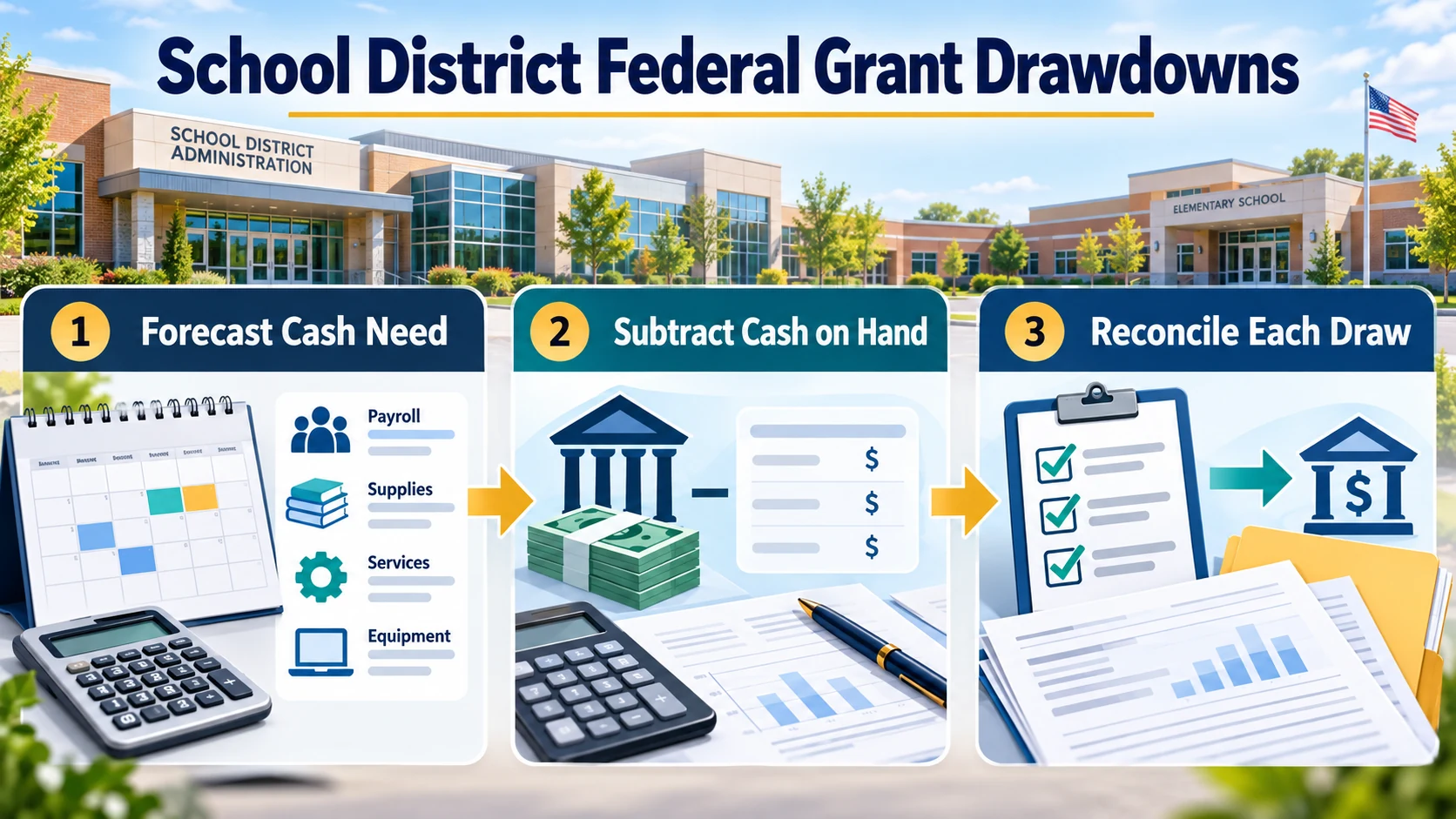
A practical cash-management workflow for K–12 districts: forecast near-term grant payments, subtract cash on hand, document each draw, and reconcile excess funds.

A practical file checklist for school district sole-source purchases with federal grants: test the exception, document the market, support the price, and retain approvals.

A practical school district payroll guide to FLSA comp time: prior agreements, 1.5-hour accrual, 240-hour cap, use requests, payouts, and audit records.

A practical K–12 guide to choosing the approved grant indirect-cost rate, defining the eligible direct-cost base, calculating recovery, and documenting controls.
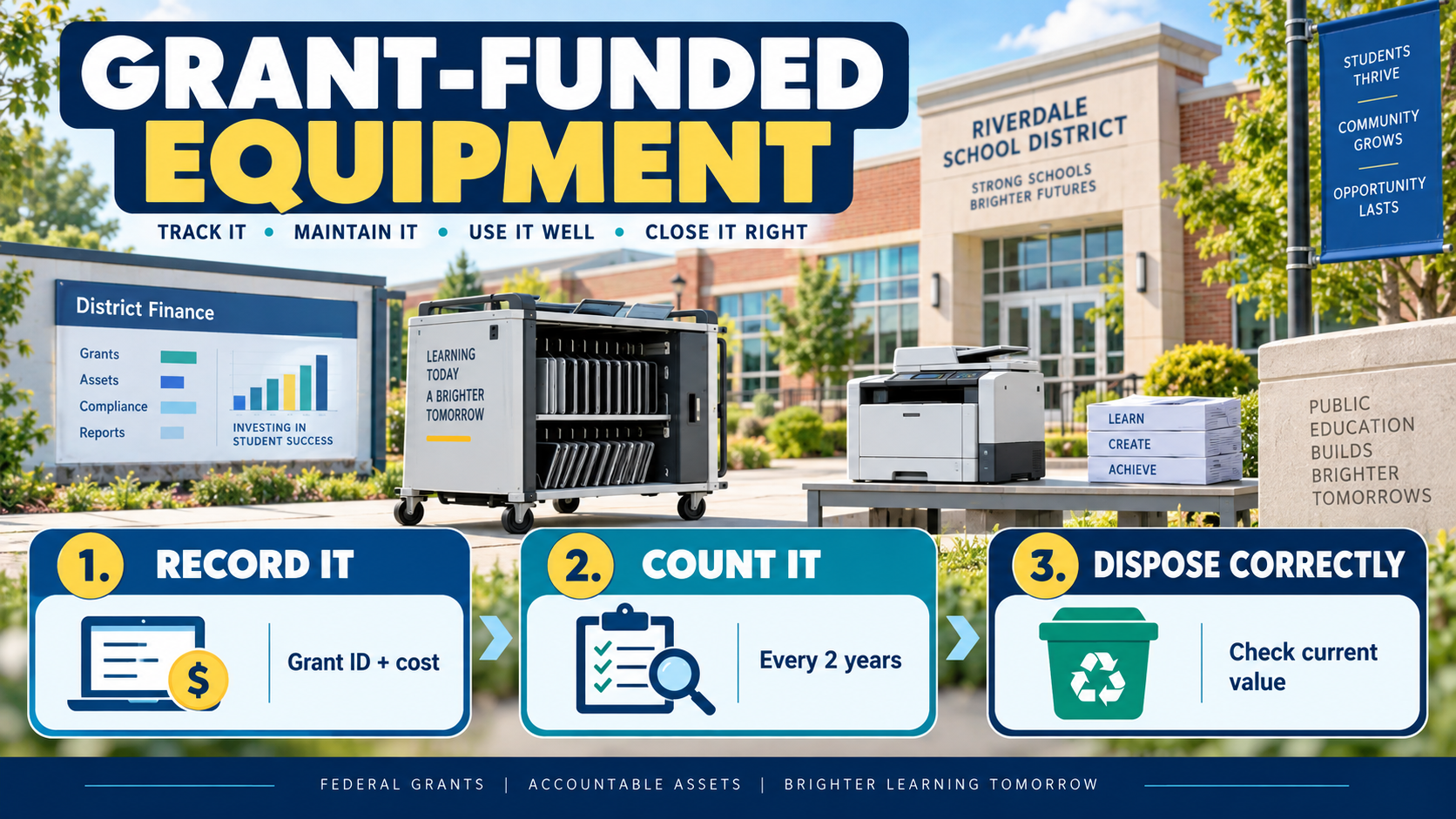
A practical guide to school district grant-funded equipment records, two-year physical counts, and compliant disposal under 2 CFR 200.313.
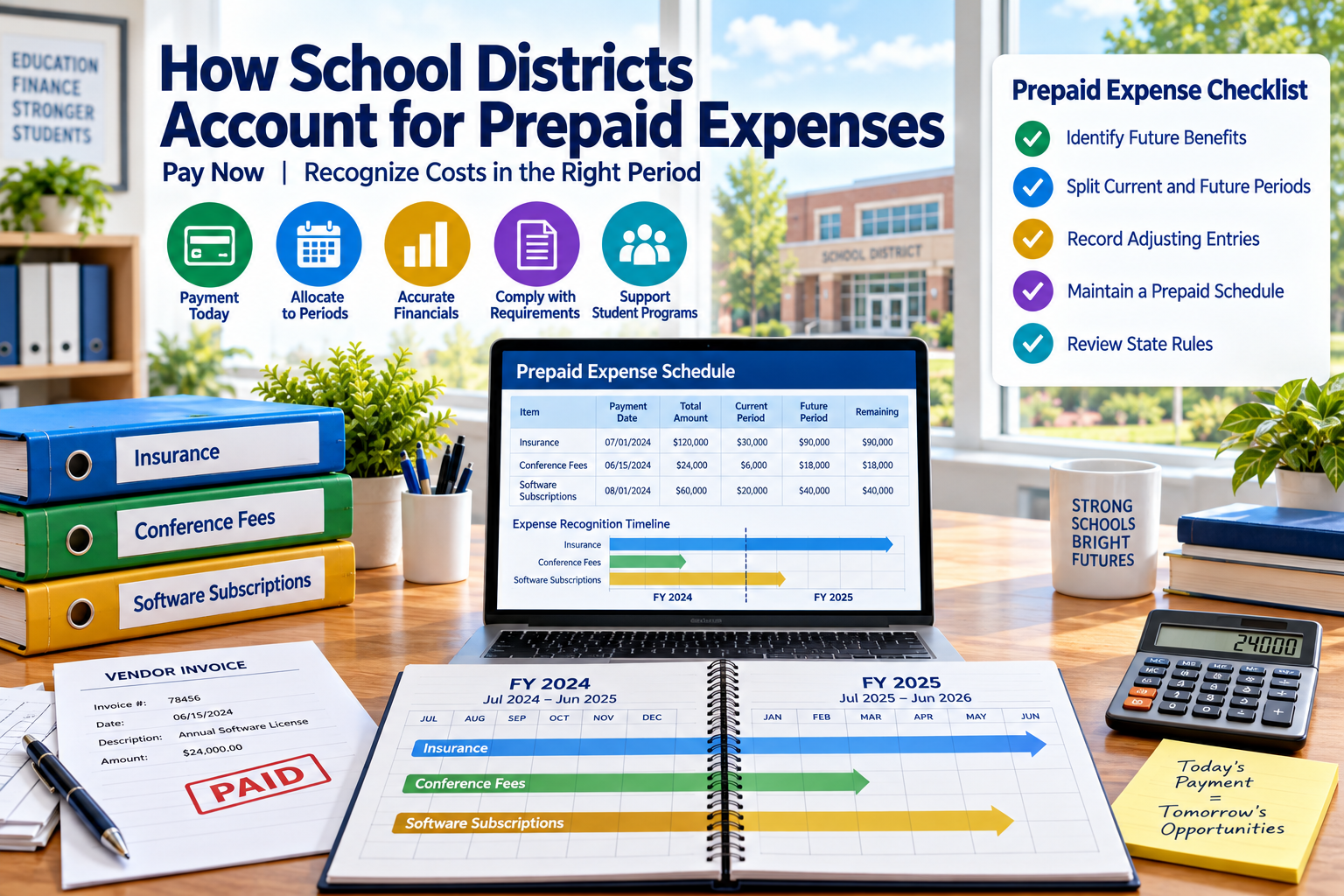
Learn how U.S. school districts identify, record, reconcile, and audit prepaid expenses, with journal entries, a year-end example, and practical controls.
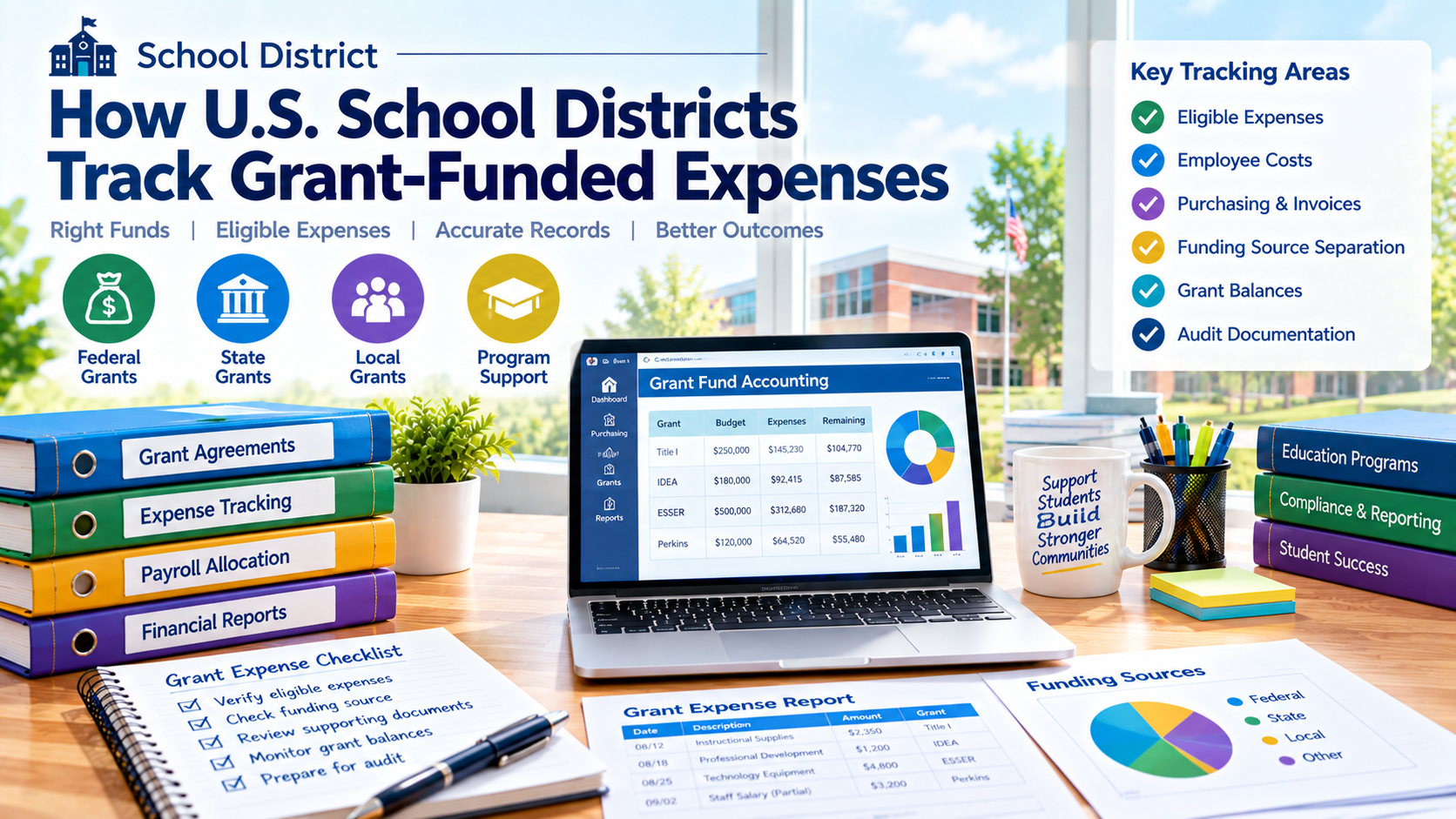
U.S. school districts often receive funding for specific educational programs and services through federal, state, and local grant programs. Unlike unrestricted operating funds, grant money may come with rules about how the funds can be used, which expenses are eligible, and what documentation must be maintained. For a school district business office, this means grant … Read more
Public school districts spend billions of dollars annually on goods, instructional materials, technology infrastructure, and contracted services. Because these purchases are funded through local tax revenues and federal grants, purchasing operations are subject to strict legal mandates designed to ensure open competition, prevent favoritism, and maximize cost efficiency. For school business officials, procurement officers, and … Read more
Public school districts manage complex financial ecosystems comprising taxpayer dollars, federal grants, student activity accounts, and capital reserve funds. Because school business offices handle high volumes of transactions across multiple departments, establishing robust internal controls and risk management protocols is essential to prevent financial loss, maintain public trust, and comply with state and federal auditing … Read more